SwInG
»Realisation of a demonstrator for drone-based recording of large structures to assess geo-risks and as a basis for the sustainable use of complex habitats«
Funding period: 2019 until 2020
Type of project: demonstrator project
Project partners:
Contact
Prof. Dr. Alexander Reiterer
+49 761 8857-183
alexander.reiterer@ipm.fraunhofer.de
Prof. Dr. Barbara Koch
+49 761 203-3694
barbara.koch@felis.uni-freiburg.de

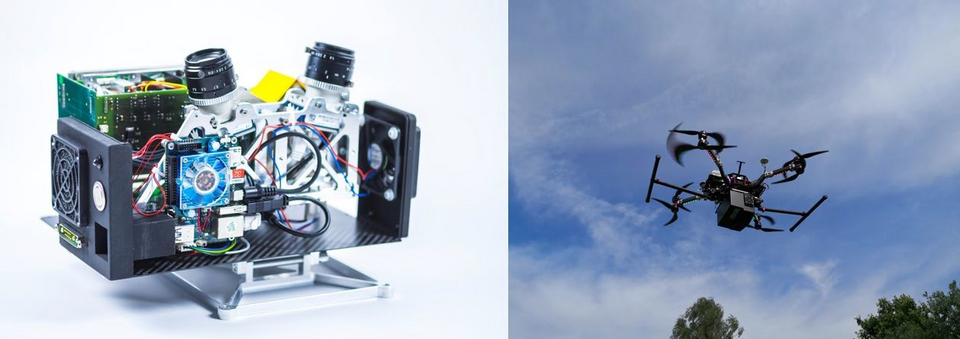
The mobile use of measurement systems (e.g. laser scanners, cameras) is always limited by their size and weight. In particular, the use of such systems on flying platforms (civilian drones) is strongly determined by the load-bearing capacity of the aircraft. The fully functional and globally unique result of the LZN pilot project MulDiScan could therefore only be used to a limited extent for demonstration purposes with industrial partners. The challenge and innovation of the successor project SwInG therefore lay in an extremely lightweight design with a simultaneous increase in the performance of the measuring system (including an increase in the maximum measuring distance). This is also the unique selling point of the SwInG system. A range of up to 300 metres with an accuracy of 4 mm was previously not available on the market in this size and weight class.
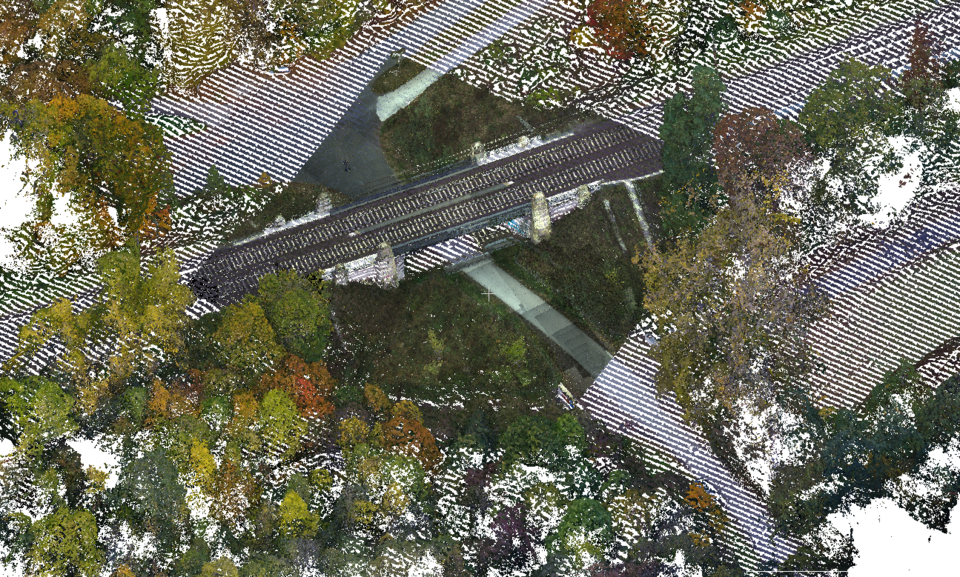
The weight reduction was achieved through the use of the latest 3D printing techniques and carbon composite materials, as well as the consolidation and massive downsizing of the electronics. Furthermore, the evaluation of the data was largely automated. This results in a globally unique system that can be flexibly adapted to a wide range of application requirements. In close cooperation with industrial partners from various disciplines, the system has been optimized for a very wide range of applications and now opens up new and diverse possibilities for use on unmanned aerial vehicles: for example, it is possible to record natural areas such as forests and fields, as well as to monitor traffic infrastructure and can replace very expensive complete solutions in this area, for example.
Based on the SwInG demonstrator project, the LZN is currently funding the subsequent scaling project SwInG 4.0, which aims to expand the demonstrator for drone-based detection of large structures.
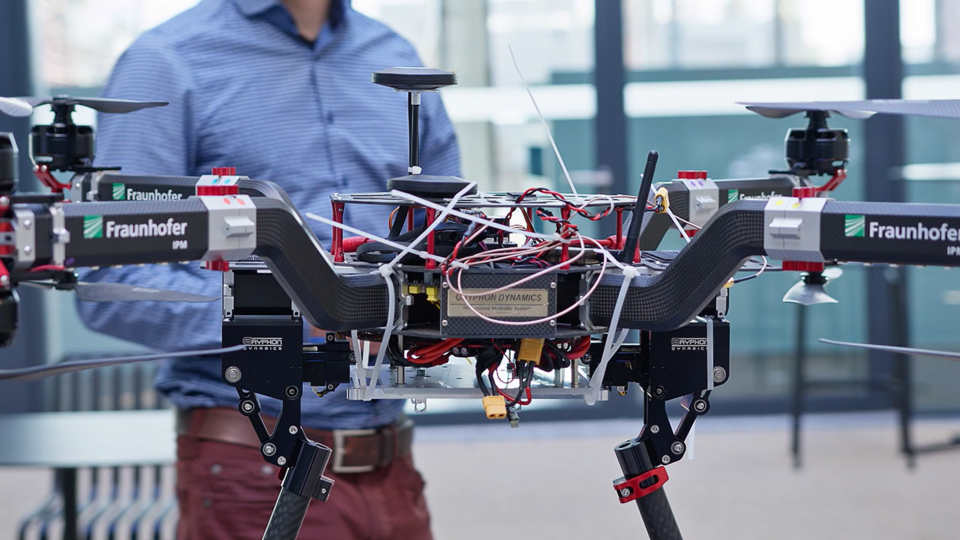
Video: SwInG
Dabei akzeptieren Sie die Datenschutzerklärung von YouTube.